
May 2, 2026
Learning to Unlearn
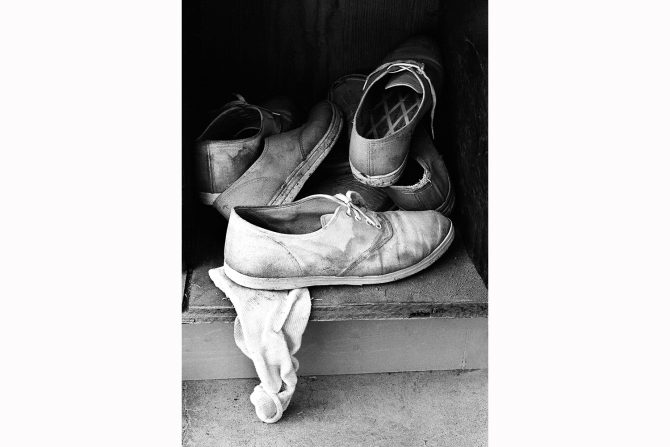
Shoes – 1970
Can you remember when you first discovered photography?
Can you remember the excitement you felt at finding something that you were passionate about?
Can you remember the feeling when you created an image that you really loved?
I can.
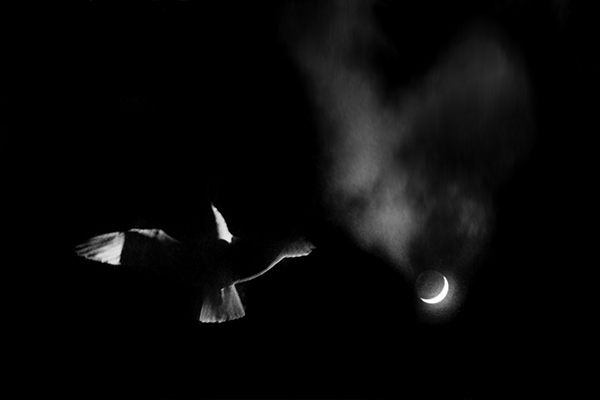
Gull and Moon – 1970
I created “Gull and Moon” at the age of 16, and this was the first image that I really loved and was proud of. I was young, self-taught, I didn’t know the rules or how I was “supposed” to photograph, and I had not yet begun to follow trends.
I was a child with a camera and an imagination, and that was enough.
But then something happened: I decided that I wanted to be a “successful” photographer. I had never thought about what “success” meant to me, I just accepted the widely accepted definition for photographers: to be famous, to have my work in a big-name gallery, to sell my prints for lots of money, and to have a book of my work published.
What else could success mean?
And so I started doing what I thought would make me successful:
- I copied others’ work
- I imitated others’ subjects and styles
- I followed rules and common wisdoms
- I focused on technical perfection
- I created for popularity
- I listened to others’ advice
It turns out that everything I did was the exact opposite of what I should have done. (That’s a Seinfeld reference; do you know the episode?)
And the result? My work was average, boring, and indistinguishable from everyone else’s. I did not create original work, but I took pride in my technical perfection because that was all I had to offer.
Over time, I lost my passion for photography. I felt frustrated, empty, and unfulfilled, but I didn’t know what was wrong or how to fix it. But in 2004, when I was challenged to find and follow my Vision, everything changed.
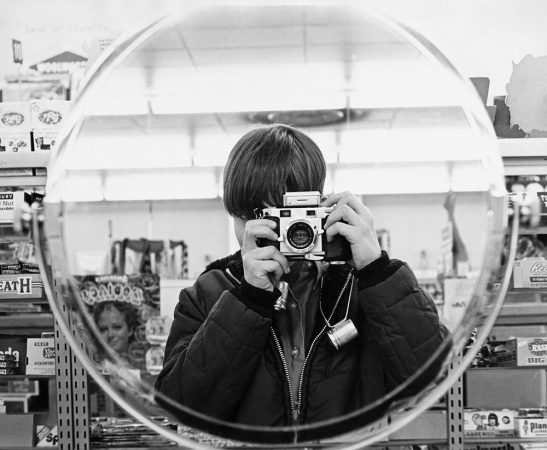
Me at age 14
As I found my Vision, I noticed that my natural child-like creativity and love for my work were returning. Why was this happening? Here’s a thought from Rick Rubin:
“Beginner’s mind – one of the most difficult states of being to dwell in for an artist, precisely because it involves letting go of what our experiences have taught us.
A beginner’s mind starts from a pure childlike place of not knowing. Living in the moment with as few fixed beliefs as possible.
Seeing things for what they are as presented. Tuning in to what enlivens us in the moment instead of what we think will work. And making our decisions accordingly. Any preconceived ideas and accepted conventions limit what’s possible.
We tend to believe that the more we know, the more clearly we can see the possibilities available. This is not the case. The impossible only becomes accessible when experience has not taught us limits. There’s a great power in not knowing.”
One key to regaining my child-like creativity was learning to unlearn everything I thought I knew about photographing. I had to:
- Unlearn years of teachings.
- Unlearn rules and conventions.
- Unlearn my dependence on the advice of experts.
- Unlearn my need for others to like my work.
- Unlearn my belief that there’s a right way to photograph.
- Unlearn everything that restricts me.
It’s really, really hard to turn back the clock of time and to think, see, and feel like our younger selves! Here’s how I started the process:
First, I found my Vision. I learned to see through my own eyes and not through the eyes of Ansel, Edward, Imogen, or Wynn.
Second, I had to understand why I photographed. When I began photographing at age 14, I did so for only one reason: the pure joy of creating.
Third, once I understood why I was photographing, I was able to define success for myself: creating images that I love.
Fourth, the hardest thing of all was to learn not to care what others thought of my work. To do this, I had to keep reminding myself why I was creating.
I feel good when I create something that I love and am proud of. It’s like being 16 all over again, and that’s a feeling I wouldn’t trade for a thousand likes.


Cole, you are amazing!
Thanks Daphne, that’s three of us! (you, me, and my dog)
At 14, my Father’s Leica, c. 1952-53, peaked my curiosity of creative photography. Thank you Cole, for sharing your Vision motivations to unlearn.
Do you still have it? I hope so!